


Financial planning is more than just recording numbers at the end of each month. It involves knowing your business’s financial health at every step and using that insight to make smarter choices. When your financial data is spread out in spreadsheets, emails, and different tools, it becomes harder to keep things accurate. Reports take longer to prepare, and planning is less dependable.
An ERP software can help by bringing your financial and operational data into a single, organized system. With proper setup, ERP makes financial planning easier and ensures your reports are accurate.
Why Financial Accuracy Matters
Accurate financial data is crucial for any growing business. It lets leaders see how the company is doing, managing costs, and planning for future investments. If reports are late or incorrect, decisions may rely on guesses rather than real information. Reliable financial data helps with:
- Clear budgeting and forecasting.
- Better cash flow management.
- Regulatory compliance.
- Confident decision-making.
Even profitable businesses can face unexpected risks if their data is inaccurate.
How ERP Supports Better Financial Planning
ERP systems link finance with sales, inventory, procurement, and operations. This way, financial management software planning relies on actual business activities rather than estimates.
Centralized Financial Information
ERP (Enterprise Resource Planning) stores all financial data together, rather than spreading it across different systems. This makes it easier to:
- Reduce duplicate entries and manual errors.
- Keep income, expenses, and invoices up to date.
- Give finance teams reliable data for their reviews.
Real-Time Financial Visibility
The ERP tool for finance lets you see financial data as soon as it is available. With this, businesses can:
- Track cash flow as it happens.
- Keep a close eye on expenses and revenue.
- Spot and solve problems early on.
Improved Budgeting and Forecasting
ERP improves the accuracy of budgeting and forecasting by relying on past data. This helps teams:
- Compare their budgets to actual results.
- Identify trends and patterns as they develop.
- Plan resources with greater efficiency.
ERP and Reporting Accuracy
Accurate reporting is just as important as effective financial planning. ERP systems improve reporting by ensuring consistency and reducing dependence on manual processes.
Automated Financial Reporting
ERP systems create reports straight from transaction data. This leads to:
- Financial statements can be prepared more quickly.
- There are fewer calculations.
- Teams have less manual work to do.
Consistent and Reliable Data
ERP makes sure every department works with the same set of data. As a result, companies see:
- Reports that match across different teams.
- Insights that are clear and reliable.
- Greater trust among managers.
Easier Compliance and Audits
ERP systems maintain detailed records and transaction histories, making audits more straightforward. Clear audit trails support regulatory compliance and reduce the risk of errors or disputes. Businesses stay prepared for audits and financial reviews without last-minute data collection.
Role of LionO360 in ERP-Driven Financial Management

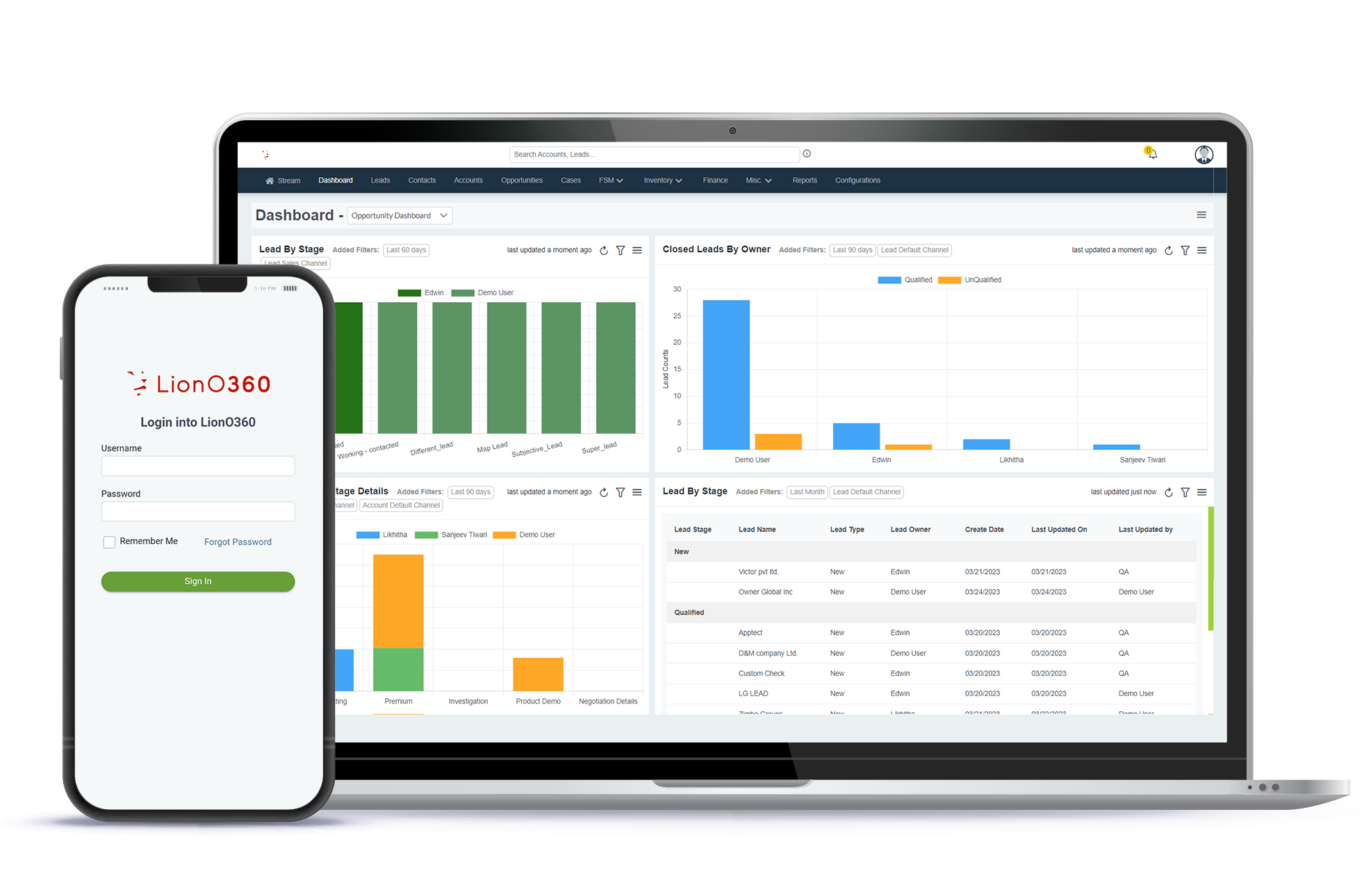
LionO360 ERP combines customer, sales, and financial data in one place, making it easier for businesses to manage financial processes. It links daily sales activity with financial records, so data stays accurate and simple to follow.
It helps businesses by:
- Linking sales activity directly to revenue records.
- Keeping invoicing and payment tracking simple and organized.
- Giving clear visibility into cash flow and outstanding payments.
LionO360 ERP also offers simple dashboards and reports that show management how the business is performing financially. These tools cut down on the need for complicated spreadsheets and help leaders make quicker, more confident decisions.
Long-Term Value of ERP for Financial Accuracy
ERP for financial planning systems help businesses grow over time by keeping financial processes organized and reliable. As companies get bigger, ERP makes it easier to manage and keep financial operations consistent.
- As time goes on, businesses gain several advantages
- They can close their books faster and with greater accuracy.
- They are better prepared to grow without losing track of their finances.
With this long-term setup, organizations can grow confidently while keeping their financial data accurate and reliable.
Conclusion
ERP software helps organize financial operations, so businesses can plan and report with greater confidence.
When businesses use LionO360 CRM alongside ERP-based financial processes, they can connect sales, operations, and finance on a single platform. This helps them stay accurate, meet compliance requirements, and prepare for future growth. Book your free ERP demo now.
Frequently Asked Questions
What is ERP in financial planning?
ERP lets businesses manage their finances more easily by storing all financial data in one place. This makes planning and control simpler.
How does ERP improve reporting accuracy?
ERP uses up-to-date data and automation to cut down on manual mistakes and keep reports accurate.
Can ERP support growing businesses?
Yes, ERP grows with your business and helps keep financial processes organized as you expand.
How does LionO360 CRM support ERP-based finance?
LionO360 CRM links sales and finance data, so tasks like invoicing, tracking revenue, and reporting become easier.