
Running an online store without a proper system to manage your customers is like trying to fill a bucket full of holes. An ecommerce CRM system is the tool that plugs those holes, keeps your customers happy, and helps your store grow in a smart, steady way.
Key Takeaways:
Before we dive in, here is a quick look at what you will learn from this guide:
- What an ecommerce CRM system is and how it is different from a regular CRM tool.
- The top benefits of using CRM sales software for your online store in 2026.
- Must-have features to look for when picking the right system.
- How CRM helps you grow customer loyalty, boost repeat sales, and save time.
- A simple step-by-step guide on how to get started with an ecommerce CRM.
- Common mistakes to avoid so you get the most out of your investment.
What Is an Ecommerce CRM System?
Think about everything that happens when someone shops on your website. They browse products, add items to their cart, maybe leave without buying, come back later, place an order, ask a question, and then maybe buy again. That is a lot of activity for just one customer. Now imagine thousands of customers doing this every single day.
An ecommerce CRM system is software that collects all of this information and puts it in one place. CRM stands for Customer Relationship Management. It is a tool that helps online stores understand their customers better, talk to them in a more personal way, and build strong long-term relationships.
Unlike a general CRM that is built for business-to-business sales teams, an ecommerce CRM is made specifically for online stores. It connects directly to your store and tracks things like:
- What products a customer looked at
- What they put in their cart and left behind
- What they actually bought and when
- How they responded to your emails
- What questions they asked your support team
All this data lives in one neat profile for every customer. That means no more guessing. You can see exactly who your customers are, what they want, and when they are most likely to buy again.
Ecommerce CRM vs Traditional CRM: What Is the Difference?
| Feature | Traditional CRM | Ecommerce CRM System |
|---|---|---|
| Built for | B2B sales teams | Online stores and shoppers |
| Tracks | Leads and deals | Orders, browsing, and cart activity |
| Automation | Email follow-ups | Abandoned cart emails, win-back campaigns |
| Data source | Manual entry | Auto-synced from your store |
| Customer view | Contact records | Full shopping journey |
| Sales cycle | Long (weeks or months) | Short (hours or days) |
| Focus | Closing deals | Building loyalty and repeat sales |
A lot of business owners wonder if they can just use a regular CRM for their online store. The short answer is that you can, but it will not give you everything you need. Here is a simple side-by-side look:
As you can see, an ecommerce CRM system is designed around the way online shoppers actually behave. It works in fast, high-volume environments where you need automation and smart data, not just a contact list.
Top Benefits of Using an Ecommerce CRM System
1. All Your Customer Data in One Place
Before CRM, most online stores had customer information scattered across different tools. Order details in one place, email data in another, support tickets somewhere else. It was messy and time-consuming.
An ecommerce CRM system brings everything together into a single customer profile. You can see a customer's full history, including every order, every email they opened, every chat they had with your support team, and every product they viewed. This gives you what experts call a "360-degree view" of your customer, and it changes how you make decisions.
When your team has the full picture, they can answer questions faster, fix problems quicker, and serve customers better. That leads to happier buyers and more sales.
2. Smarter, More Personal Marketing
Generic marketing is becoming less and less effective. Today's shoppers expect brands to know them and speak to them in a way that feels personal.
With CRM sales software, you can group your customers based on their shopping behavior. For example:
- Customers who bought from you more than three times
- People who added items to their cart but never checked out
- Shoppers who have not purchased in the last 90 days
- Buyers who always go for sale items
Once you have these groups, you can send the right message to the right person at the right time. A first-time buyer gets a welcome message. A person who left a cart gets a reminder. A loyal customer gets an exclusive offer. This kind of targeted messaging gets much better results than sending the same email to everyone.
3. Better Customer Retention and Loyalty
Getting a new customer costs much more than keeping one you already have. Studies have shown that keeping an existing customer can be up to five times cheaper than finding a new one. That is a big deal for any business trying to grow.
An ecommerce CRM system helps you keep customers coming back through:
- Win-back campaigns for customers who have gone quiet
- Loyalty rewards for your most active buyers
- Replenishment reminders for products customers buy again and again
- Cross-sell suggestions based on what they have already purchased
- Post-purchase follow-ups to check in and build trust
When customers feel seen and valued, they come back. And when they come back, your revenue grows without spending more on ads.
4. Automation That Saves Time
One of the biggest advantages of CRM sales software is automation. You set up a workflow once, and it runs on its own. Some of the most useful automations for ecommerce include:
- Sending a welcome email the moment someone signs up
- Following up when a cart is abandoned
- Alerting your team when a high-value customer places a big order
- Sending a thank-you message after a purchase
- Triggering a review request a few days after delivery
These automations free up your team to focus on bigger tasks. Instead of manually tracking who needs a follow-up, the system does it for you around the clock.
5. Smarter Decisions with Real Data
Guessing is expensive. When you make decisions based on gut feelings instead of data, you waste money on things that do not work. An ecommerce CRM system gives you clear, real-time reports, so you always know what is going on.
Some of the most useful reports you can pull include:
- Which customer group brings in the most revenue
- Which email campaigns lead to the most purchases
- What the average order value is for different segments
- How many customers buy once versus how many buys again
- Which products are most popular with your best customers
With this kind of insight, you can put your money and energy into what actually works. That is how smart businesses grow faster.
6. Better Customer Support
When a customer reaches out with a problem, the last thing they want to do is explain their full history. With an ecommerce CRM system, your support team can pull up a customer's complete record in seconds. They can see what the customer ordered, when it shipped, what they asked before, and how past issues were handled.
This leads to faster resolution, less frustration, and customers who feel genuinely cared for. And happy customers talk about your brand. That kind of word-of-mouth marketing is priceless.
Must-Have Features in an Ecommerce CRM System
Not all CRM tools are built the same. When you are shopping for the right one, here are the key features to look for:
| Feature | Why It Matters |
|---|---|
| Store integration | Connects directly to Shopify, WooCommerce, or your platform |
| Unified customer profiles | Shows full order and interaction history in one view |
| Smart segmentation | Groups customers by behavior, not just basic info |
| Marketing automation | Runs email and SMS campaigns on autopilot |
| Abandoned cart recovery | Automatically follows up on lost sales |
| Real-time analytics | Shows you what is working and what is not |
| Omnichannel support | Handles email, chat, social, and phone in one system |
| AI-powered insights | Predicts customer behavior and flags at-risk buyers |
| Mobile access | Lets your team work from anywhere |
| Scalability | Grows with your business without breaking |
If a CRM checks most of these boxes, it is worth a closer look. If it misses the important ones like store integration and segmentation, you may end up frustrated down the road.
How to Set Up an Ecommerce CRM System: Step by Step
Getting started with a CRM does not have to feel overwhelming. Here is a simple path to follow:
Step 1: Know what you need:
Before picking up a tool, write down your biggest pain points. Are you losing customers after one purchase? Is your team drowning in customer emails?
Step 2: Choose the right tool:
Look at a few options that fit your store's size and budget. Each one has different strengths, so match the tool to your needs.
Step 3: Connect it to your store:
Most CRM tools have built-in connections with major platforms like Shopify, WooCommerce, and BigCommerce. Connect your store so the CRM can start pulling in customer data automatically.
Step 4: Clean up your data:
Before you start running campaigns, make sure your customer data is clean and organized. Remove duplicate contacts, fill in missing information, and set up proper tags and segments.
Step 5: Build your first automations:
Start simple. Set up an abandoned cart email, a welcome series for new subscribers, and a basic win-back campaign. Once those are running, you can add more.
Step 6: Train your team:
Even the best CRM is useless if your team does not use it. Spend time training your staff on how to pull up customer records, log interactions, and use the reporting features.
Step 7: Measure and improve:
Check your results regularly. Look at open rates, conversion rates, and repeat purchase numbers. Use what you learn to improve your campaigns and workflows over time.
Common Mistakes to Avoid
Even with a great ecommerce CRM system, businesses sometimes make avoidable mistakes. Watch out for these:
- Treating your CRM is like a broadcast tool. Use your segments wisely.
- Ignoring data quality. Bad data leads to bad decisions. Keep your records clean and up to date.
- Skipping training. If your team does not know how to use the tool, it will collect dust. Invest in proper onboarding.
- Expecting overnight results. CRM is a long-term strategy. Give it time to work before judging it.
- Using too many tools at once.
If your CRM, email platform, and support tool are all separate and not connected, you will lose data. Try to consolidate where you can.
What Is the Future of Ecommerce CRM in 2026?
The ecommerce CRM space is moving fast. Here are the biggest trends shaping things right now:
AI-powered personalization is becoming the norm. Instead of setting rules manually, AI can now predict which customers are about to churn, what products to recommend, and when to send a message for the best chance of a sale.
Omnichannel engagement means customers expect a smooth experience whether they are on your website, your mobile app, your social media, or chatting with support. A good ecommerce CRM system ties all of these together so nothing falls through the cracks.
Predictive analytics help businesses get ahead of problems instead of reacting to them. If the system can flag a customer who is losing interest before they leave, you have a real chance to win them back.
First-party data is becoming more important as privacy rules tighten and third-party cookies disappear. Your CRM becomes the place where all of that valuable first-party data lives and works for you.
LionO360 CRM: The Smart Choice for Growing Ecommerce Brands

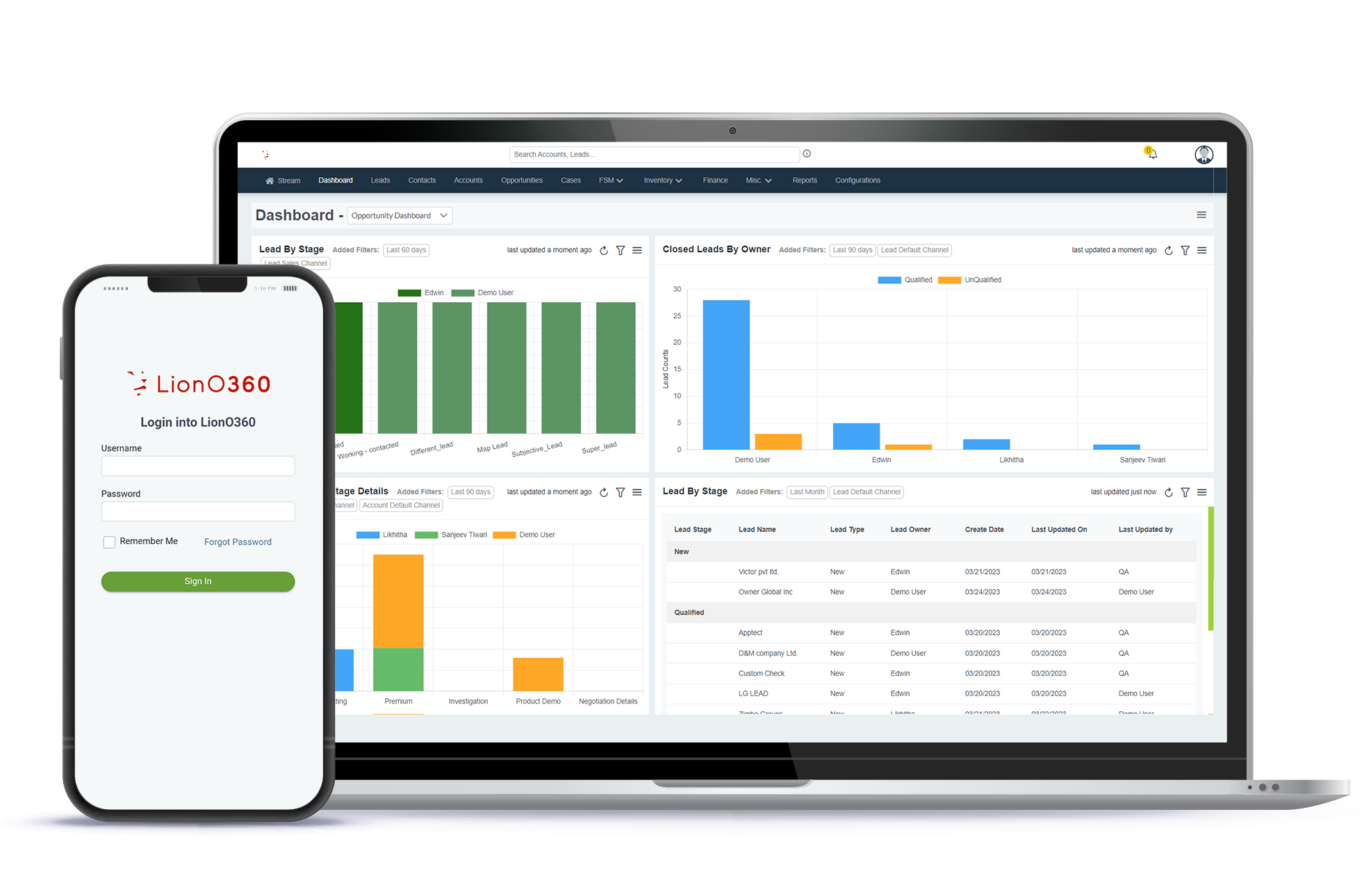
If you are looking for a CRM that truly understands what ecommerce businesses need, LionO360 is worth your attention. It is built to help online brands manage their customer relationships without the confusion that often comes with big, complex tools.
LionO360 brings together CRM sales software features with tools designed specifically for ecommerce teams. Whether you are managing a small store or scaling a growing brand, LionO360 gives you the customer data, automation, and reporting you need to make smarter decisions every day.
Here is what makes LionO360 CRM stand out for ecommerce businesses:
- A clean and easy to use interface that your team will actually enjoy using
- Full customer profiles that show purchase history, support interactions, and campaign activity in one view
- Automation tools that handle follow-ups, reminders, and win-back campaigns without manual work
- Smart reporting that shows you exactly where your revenue is coming from
- Flexible integrations that connect with the tools your store already uses
- A support team that helps you get set up and keeps things running smoothly
The LionO360 is not just a tool. It is a growth partner for ecommerce brands that want to build real, lasting relationships with their customers.
Ready to take your online store to the next level? Explore more with your free CRM demo and see what a smart ecommerce CRM system can do for your business.
Frequently Asked Questions
What is an ecommerce CRM system?
An ecommerce CRM system is software that helps online stores manage all of their customer data, purchase history, and interactions in one place. It lets you track shopping behavior, automate marketing, and build stronger relationships with your buyers so they keep coming back.
How is an ecommerce CRM different from a regular CRM?
A regular CRM is built for business-to-business sales teams that manage long deal cycles. An ecommerce CRM is built for online stores. It connects directly to your store, tracks real-time shopper behavior like cart abandonment and browsing, and supports fast, high-volume customer interactions that are common in online retail.
What are the main benefits of using CRM sales software for an ecommerce business?
The main benefits include better understanding of your customers, more personal and targeted marketing, higher repeat purchase rates, time savings through automation, smarter business decisions through real data, and faster, more helpful customer support. Together, these help you grow your revenue without spending more on ads.
Do small ecommerce stores really need a CRM system?
Yes. Even small online stores benefit from having a CRM. As soon as you have more customers than you can keep track of in a spreadsheet, a CRM starts to pay off. It helps you stay organized, send better emails, recover abandoned carts, and build the kind of loyalty that turns one-time buyers into regulars.
How long does it take to set up an ecommerce CRM system?
It depends on the size of your store and how complex your setup is. A basic CRM setup can be done in a few days. A full integration with automation workflows, segmentation, and team training can take anywhere from a few weeks to a couple of months. Starting simple and building from there is often the best approach.