
Faridabad, a diverse region in the NCR, is a major manufacturing center in India. The city has industries such as automotive components, heavy machinery, electrical equipment, plastics, and engineering goods. In this competitive market, speed, accuracy, and customer trust are more important than ever.
As a result, more manufacturing companies are adopting Customer Relationship Management(CRM) systems. CRM is not just for tracking sales anymore. It has become a key business tool that helps companies grow, work together, and build long-term customer relationships.
A Shift in Manufacturing Operations
Today, manufacturing businesses face complex processes. Sales cycles take longer, and several people are involved in making decisions. Orders are often repeated, and service commitments are just as important as pricing.
Many manufacturers in Faridabad still use spreadsheets, phone calls, and emails to manage their work. Over time, this can lead to confusion. Some leads are missed, follow-ups are delayed, and managers lack a clear view of what is happening.
More businesses are adopting CRM systems because they want a better structure. They prefer a single system that provides all customers and sales information in real time.
Why Manufacturers Are Choosing CRM
Businesses are turning to CRM because of the real challenges they face every day. Owners want more control, but they do not want to create extra manual work.
Common reasons for CRM adoption include:
- Difficulty tracking enquiries from multiple sources.
- Poor follow-up discipline across teams.
- No clear view of sales pipelines.
- Weak coordination between sales and service teams.
CRM systems help by bringing all the data together and making workflows more consistent.
Cloud CRM in Manufacturing
One clear trend in Faridabad's manufacturing sector is the move toward online CRM systems. Companies prefer systems that require little IT setup, or maintenance allows teams to access data from anywhere. Sales teams can update lead status from the field. Managers can track performance without waiting for reports.
This flexibility makes CRM useful even for mid-sized manufacturing companies that want to grow without making things complicated.
Automation Improves Daily Efficiency
The important reason more companies are using CRM is automation. Manufacturers are looking for systems that reduce manual work and errors.
CRM automation handles tasks such as assigning leads, sending follow-up reminders, creating tasks, and updating statuses. This helps make sure every enquiry gets a timely response.
Teams no longer have to rely on memory or manual tracking. With a clear process in place, productivity and consistency improve across all departments.
Better Dealer Management
Many manufacturing companies in Faridabad work through distributors and dealers. Managing these relationships manually takes time and often leads to missed follow-ups or confusion.
With a CRM system, manufacturers can clearly see dealer enquiries, past orders, and ongoing discussions in one place. This keeps communication simple and consistent across teams.
When visibility improves, businesses can respond faster, better support their partners, and still maintain control over pricing, and follow-ups on a daily basis.
Data Helps Better Decisions
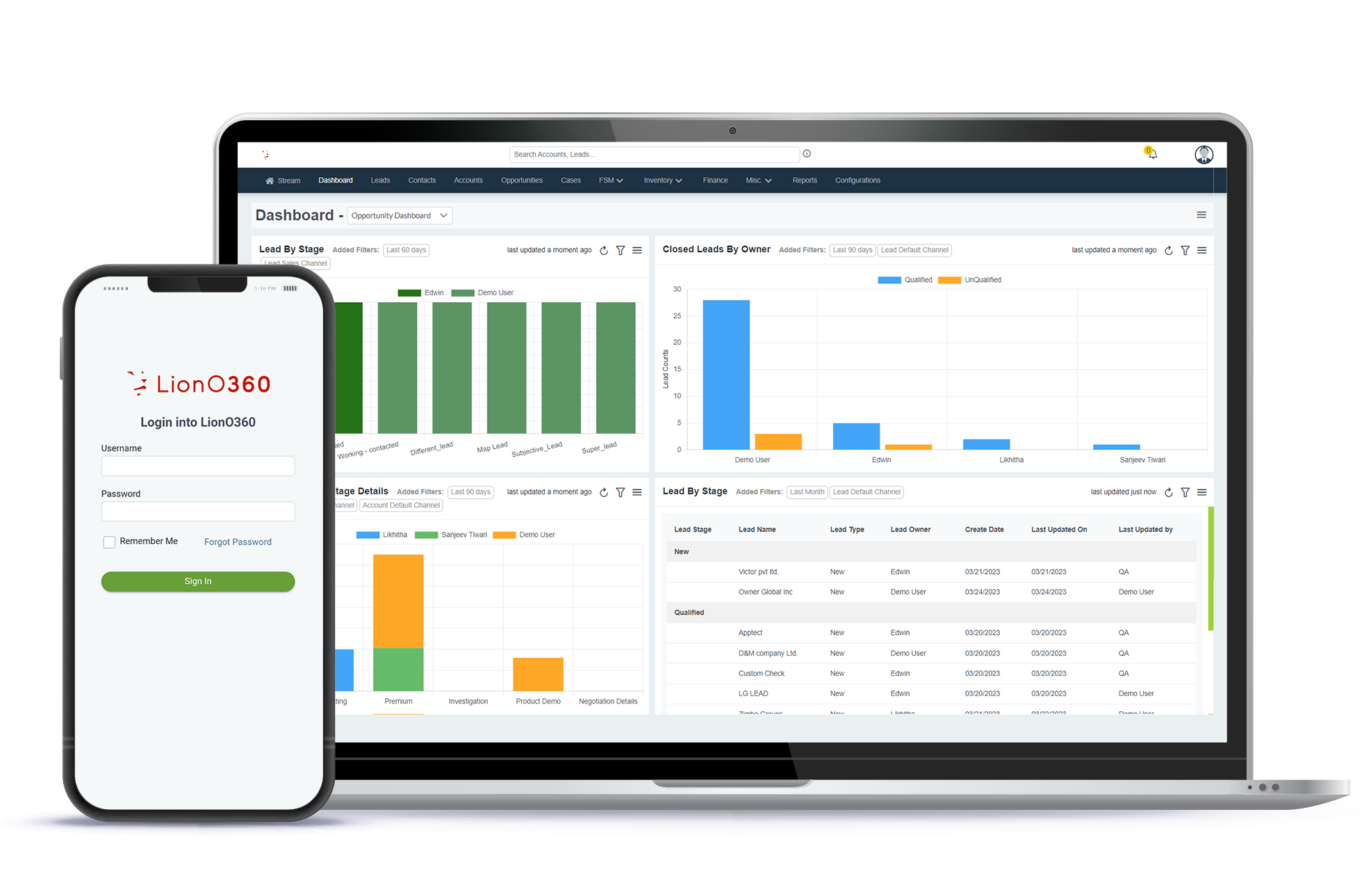
Modern CRM platforms offer easy-to-use dashboards and reports. These tools help manufacturers see what is working and what needs improvement.
CRM data lets teams track where leads come from, how many turn into sales, and how long each sale takes. Managers can notice delays early and respond quickly.
Using data instead of guesswork gives teams a clear picture. This helps them make decisions more quickly and with greater confidence.
Challenges During Adoption
Some manufacturers are unsure about adopting CRM because they worry about change or lack sufficient training. Others find it difficult to move their old data into a new system.
The right CRM partner can help manage these challenges. Choosing a system that is simple to use and fits well with manufacturing processes makes it easier for teams to get started.
When teams notice real improvements soon after starting, they are more likely to accept the new system.
How LionO360 CRM Fits Manufacturing Needs
LionO360 CRM supports growing businesses, such as manufacturers, by streamlining sales operations and giving managers a clear view of their team's activities.
The platform keeps all customer information in one place, tracks sales progress, automates tasks, provides reports, and works on mobile devices. These tools help teams work together and respond quickly.
For manufacturers in Faridabad, LionO360 CRM helps businesses grow in an organized way without making things more complicated.
Final Thoughts
More manufacturers in Faridabad are adopting CRM to better manage customers, channels, and sales processes.
With greater competition and more complex operations, CRM is now essential rather than optional. Manufacturers who choose the right CRM are better equipped for long-term growth.
LionO360 CRM helps manufacturers organize their processes and use data to make better decisions. This gives them the confidence to grow in today's digital market.
Frequently Asked Questions
Why are manufacturing companies in Faridabad adopting CRM systems?
Manufacturers are using CRM systems to keep track of leads, customers, and dealer networks all in one place. This makes it easier to follow up, see sales progress, and work better as a team.
How does cloud-based CRM help manufacture businesses?
With cloud CRM, teams can access their data from any location. Sales staff can update details right away, and managers see updates instantly without needing manual reports.
Is CRM useful for mid-sized manufacturing companies?
Yes, they are. Today's CRM systems are simple to use, can grow with your business, and don't need a lot of IT support. They help mid-sized manufacturers expand without making things more complicated.